
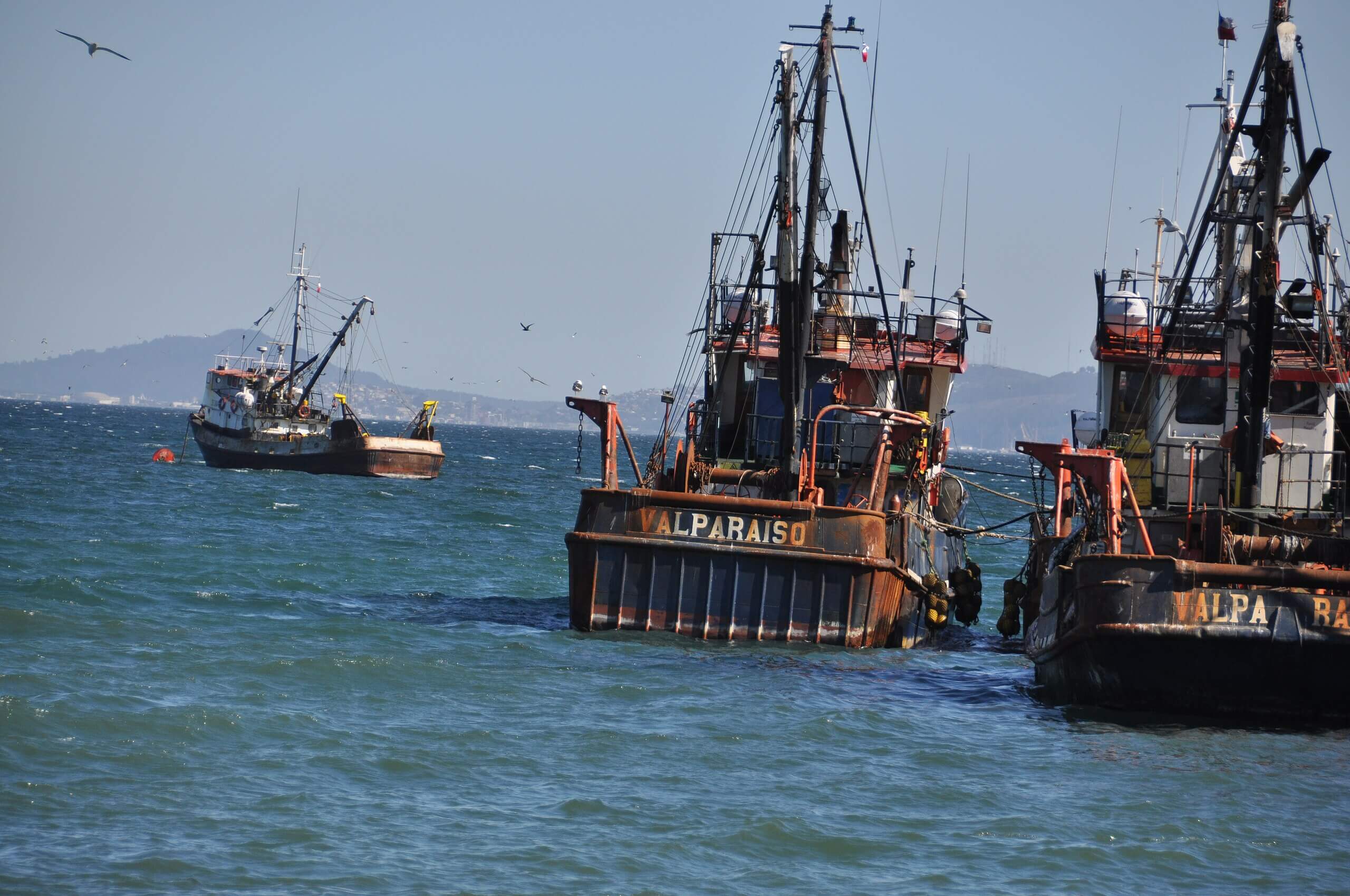
Chilean fishermen denounce Chinese fleets and illegal fishing in the Pacific
Photo: Wikimedia Commons.

Artisanal fishermen from Coquimbo, Valparaíso, and Iquique have denounced the presence of a foreign fleet, composed mainly of Chinese squid-jigging vessels, which they claim are conducting illegal or unreported fishing activities within Chilean waters. The situation coincides with the decline of jumbo squid (Dosidicus gigas), a key resource for local fishing communities, prompting protests and urgent calls for greater maritime surveillance.
Local organizations argue that neither the Chilean Navy nor the National Fisheries Service (Sernapesca) has sufficient technical capacity to monitor the movements of industrial fleets in real time. The intense lighting systems used by the Chinese vessels attract squid away from the coast and into deeper waters, severely reducing catches for artisanal fishermen who depend on the species for their livelihoods.
The Ministry of Defense confirmed the presence of 166 foreign vessels off Chile’s northern coast but stated they remain outside the country’s territorial limits. Fishermen, however, claim that the lack of effective monitoring and limited international coordination have created a “control vacuum” in the South Pacific, allowing foreign fleets to exploit marine resources with impunity.
The so-called Chinese distant-water squid fleet, dedicated to catching red and jumbo squid, travels thousands of kilometers each year from the central Pacific to the Atlantic, skirting the exclusive economic zones (EEZs) of Chile, Peru, and Ecuador. International watchdogs and NGOs have repeatedly warned of these fleets’ expansion, accusing them of overfishing, regulatory evasion, and use of “flags of convenience.”
The environmental impact is considerable. Overexploitation of squid threatens to disrupt the marine food chain, affecting predators such as sharks, swordfish, and seabirds. In addition, light pollution, plastic waste, and fuel discharge from these vessels are worsening ecosystem degradation across the region.
China operates the world’s largest distant-water fishing fleet, with more than 3,000 active vessels operating beyond its national waters. While Beijing defends its overseas expansion as essential to meeting food demand, marine experts warn that China’s industrialized fishing practices exert unsustainable pressure on global fisheries.
Chilean and regional environmental organizations are urging stronger South Pacific cooperation to combat illegal fishing and protect migratory species. Without a unified strategy, they warn, unchecked exploitation will continue to threaten food security, biodiversity, and the livelihoods of coastal communities throughout Latin America.
* Original text in Spanish. Translated by Large Language Model (LLM) technology.
Main Source:
Pescadores artesanales chilenos alertan sobre la presencia de flotas chinas y pesca ilegal en el Pacífico – Noticias Ambientales
Related News:
Chile impulsa cable submarino con China y genera preocupación regional
Chile y China lanzan programa conjunto para impulsar negocios con criterios ESG
China Southern Power busca adquirir control mayoritario de Transelec en Chile